Eight ways to get online in the country, from best to worst, with what each really needs, what it costs and who it suits. Start at the top and stop at the first one your address can get.
By Starlink by StateFacts checked November 3, 2026How we check
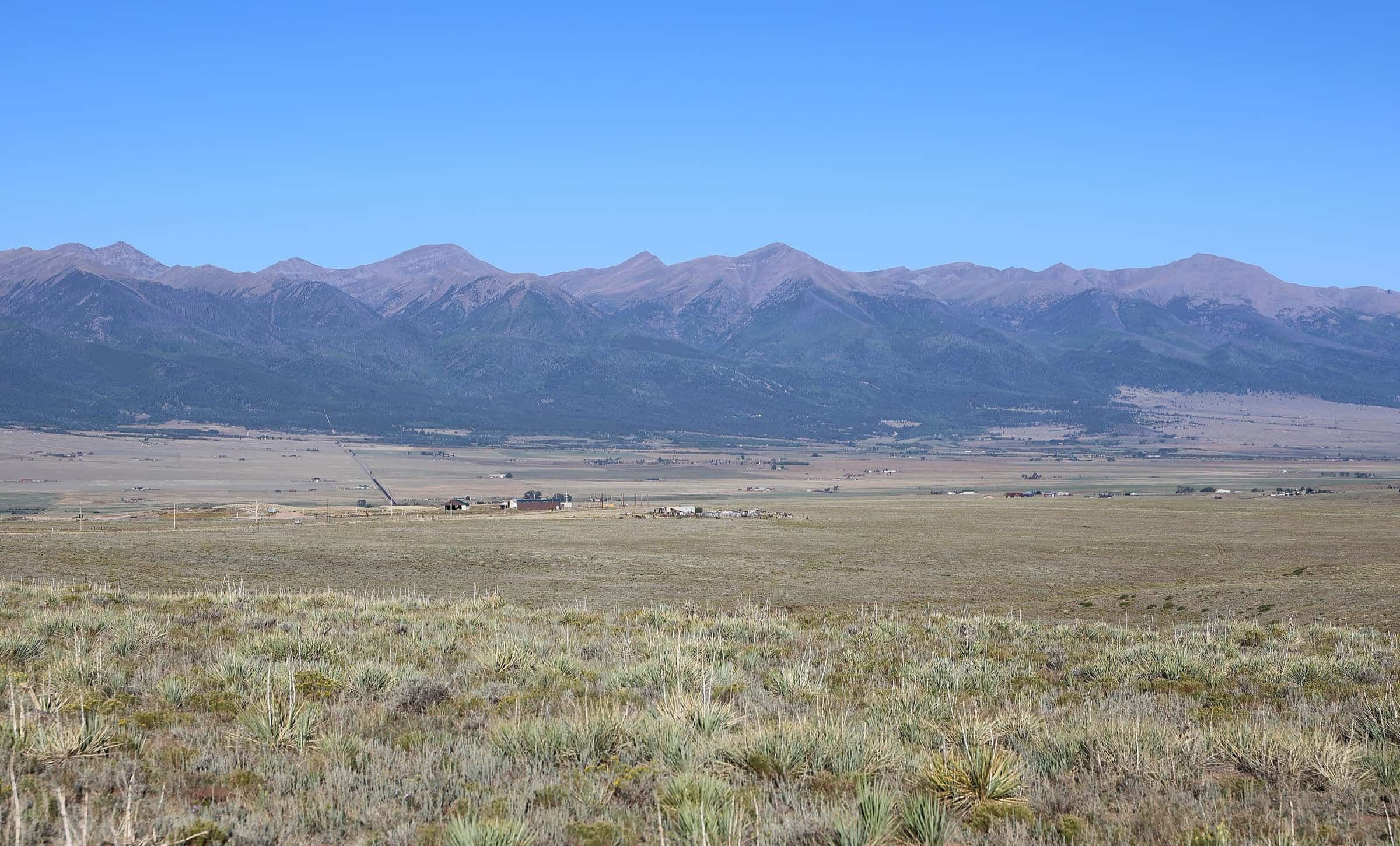
The Wet Mountain Valley below the Sangre de Cristo Range, Colorado. Photo: Jeffrey Beall, CC BY 4.0.
In brief
Fiber: take it if the FCC map and the provider confirm it at your address.
Cable: almost as good, common near towns.
Fixed wireless or 5G home internet: if a tower reaches you with a strong signal.
Low-orbit satellite (Starlink): the usual best choice when nothing above reaches you and you have open sky.
Mostly by wire, with satellite far more common out in the country. In the Census Bureau's 2025 survey (read November 3, 2026), 76.6% of US households had a wired plan (cable, fiber or DSL), 6.9% had satellite internet, 13.1% relied on a cellular data plan alone and 6.0% had no subscription at all. Rural states sit well above the satellite average: see every state compared.
1. Fiber
A glass cable brings light signals to your house. It's the fastest and most reliable home internet, with equally fast uploads, and it's what about 62.9% of BEAD-funded locations will get. Rural fiber is often built by electric and telephone co-ops; each state guide lists some.
Choose it if: it's available. Even the cheapest fiber tier usually beats every other option.
2. Cable
Internet over the TV cable network. Fast downloads and low delay; uploads are slower than fiber. It rarely reaches far beyond town limits, because building cable down long country roads is costly.
3. Fixed wireless
A local provider beams internet from a tower to an antenna on your house. Good when there's a clear line of sight; trees and hills are the enemy. How to tell if it'll work at your home.
4. 5G or 4G home internet
A gateway by your window uses the carrier's cell towers. No installer and often no contract. Works well with a strong indoor signal; can slow down in the evening if the tower is busy.
5. Low-orbit satellite (Starlink)
A dish talks to satellites a few hundred miles up. It works almost anywhere the sky is open overhead, with delay low enough for video calls. For US homes today that means Starlink, whose national order list (November 4, 2026, no address entered) showed Residential 100 Mbps $49.50, 200 Mbps $76.50 and Max $143 a month, plus equipment; your own address may be quoted a different rate. When Starlink fits a rural home, and when it doesn't.
6. Geostationary satellite (HughesNet, Viasat)
A dish aims at a satellite far above the equator. It reaches almost anywhere, but the long distance adds a delay you notice on calls and games, and plans come with data allowances or slowdowns. Satellite internet explained.
7. DSL
Internet over the copper phone line. Speeds fall the farther you are from the phone company's equipment, and many carriers are retiring rural copper. Fine for email and browsing if it's stable.
8. Phone hotspot
Your phone shares its data with your other devices. Even "unlimited" phone plans usually limit hotspot data or slow it after a set amount, so it's a stopgap, not home internet. Look for the hotspot line on the plan's Broadband Facts label.
Cable or fiber stops down the road?
Providers often quote thousands of dollars to extend a line to a single house far from their network. Before you say yes or no, ask:
Will the line go on poles or underground, and what's the price per foot?
Who digs, and who fixes the yard or driveway afterwards?
Would the price drop if neighbors sign up too? Can you split it?
Is your road already in a funded BEAD or co-op build? Then you may not need to pay at all: check first.
Read the "Broadband Facts" label before you buy
Every home internet plan in the US must come with an FCC "Broadband Facts" label, like a food nutrition label. Find it on the provider's plan page and check five lines:
Monthly price, and whether it's an introductory price and for how long.
One-time and monthly fees: installation, equipment rental, activation.
Typical download and upload speed, not just "up to".
Typical latency (delay) in milliseconds.
Data included and what happens after you use it.
Be careful with "unlimited rural internet" resellers
Some companies resell cell data with "unlimited, anywhere, no contract" claims and later get cut off by the network that actually owns the towers. Buy from the network owner or a partner it names, and look for the provider's Broadband Facts label.
No wired service at your address, no funded fiber due soon, no strong tower signal, and you live there year-round: that's where low-orbit satellite is the clear pick.
Who should wait instead of ordering Starlink
A funded fiber or cable build covers your address (BEAD or a co-op project) and should arrive within about a year: hold off and compare. How to check.
Trees, a ridge or nearby buildings hide most of your sky and there's nowhere to mount the dish above them.
The need is seasonal or short: one stay, one trip, one job. Starlink is a monthly subscription meant to stay on.
A fixed wireless or 5G home provider already gives you a strong, stable signal at a lower price and you're happy with it.
Rural internet questions, answered
What is the best internet for rural areas?
Fiber, wherever it reaches your address. Without fiber or cable, try fixed wireless or 5G home internet if your phone signal at home is strong. If not, low-orbit satellite (Starlink) is usually the best choice for a year-round home with open sky.
What is the cheapest internet for rural areas?
Often 5G home internet or a local fixed wireless provider, if the signal reaches you. Geostationary satellite has low promotional prices, but check the price after the first 12 months and the data allowance.
How much internet speed does a rural household need?
The FCC's benchmark for broadband has been 100 Mbps download and 20 Mbps upload since March 2024. One or two people streaming HD and making video calls usually manage with less; several people streaming, gaming or working from home at once are more comfortable at or above it. Upload speed matters most for video calls and backups.
Is DSL still worth it?
For light use, if it is stable and cheap. Many phone companies are retiring copper lines in rural areas, and DSL slows down the farther you live from the phone company equipment.
Can I use my phone as home internet?
As a stopgap. Phone plans usually limit hotspot data, and speeds drop when the tower is busy. A 5G home internet plan from the same carrier is a better long-term choice if your signal is strong.