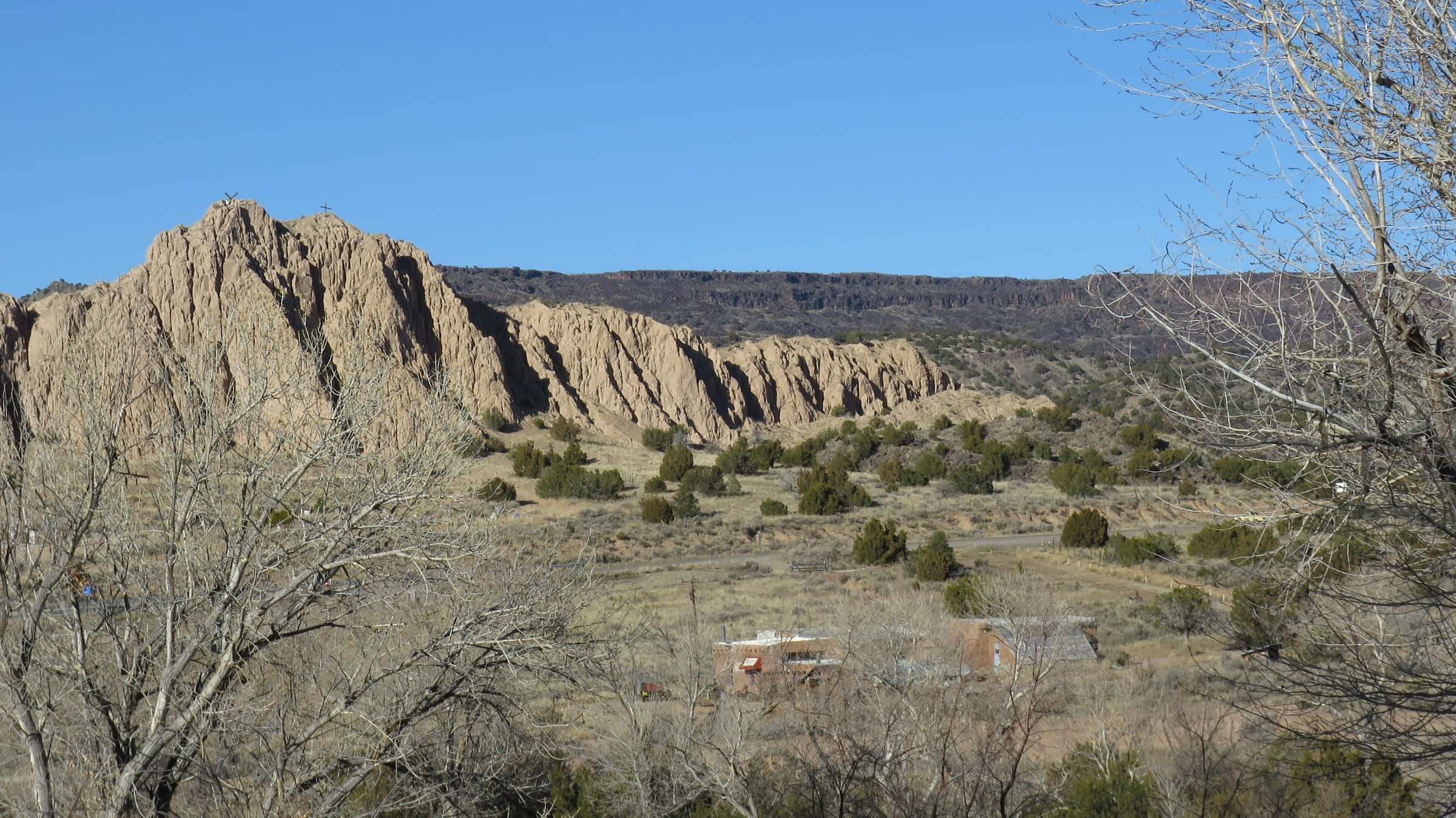

25.5% of New Mexico residents live in rural areas, the 29th highest share among the 50 states and DC. 69.3% of households have a wired plan (US: 76.6%) and 10.1% use satellite internet, above the US average of 6.9%. New Mexico's BEAD plan will connect 42,651 homes and businesses: 42% fiber, 43% fixed wireless, 15% satellite.
Best move: the FCC map first, then New Mexico's BEAD results.
- Rural residents
- 25.5%538,970 people · 2020 Census
- Homes on satellite
- 10.1%US: 6.9% · ACS 2025
- Homes with no internet
- 9.4%US: 6.0% · ACS 2025
- BEAD allocation
- $675M$675.4 million · NTIA, June 2023
- BEAD locations
- 42,651as of January 2026
Getting the best internet in New Mexico: step by step
See every provider at your address
Search it on the FCC National Broadband Map and note any fiber, cable or fixed wireless provider; 69.3% of New Mexico homes already have a wired plan. Screenshot guide.
Check whether BEAD funded your location
Open New Mexico's BEAD results. New Mexico's BEAD page lists every award recipient and offers a county table spreadsheet (which providers won in each county, with location counts and funding), the full location file, and a link to the state's broadband map portal at maps.connect.nm.gov.
Check co-op and local fiber
Start with Kit Carson Electric Cooperative and PVT (Peñasco Valley Telephone Cooperative) and run each one's address check. All 4 local builders we found.
Test the tower signal
14.5% of New Mexico households get by on cellular data alone (US: 13.1%). 5G home and fixed wireless checks.
New Mexico BEAD program: is fiber coming?
NTIA gave New Mexico $675.4 million from the BEAD program in June 2023. NTIA approved the state's final plan on January 27, 2026. The plan puts about $382 million into construction. It covers 42,651 locations (data as of January 26, 2026):
- Fiber 17,772 (42%)
- Fixed wireless 18,297 (43%)
- Satellite 6,582 (15%)
The mix is close to the national one (62.9% fiber, 21.9% satellite), so your own location's award matters more than the state average.
In New Mexico's latest award list, SpaceX (Starlink) holds 559 locations worth $838,500. Amazon (Leo) holds 4,956 locations worth $3 million. If your address is one of these satellite locations, ask New Mexico's broadband office how funded locations sign up before you buy equipment. What a BEAD satellite location means.
Changes since approval
- July 1, 2026: OBAE rescinded all eleven provisional BEAD awards to Resound Networks, LLC (totaling $57,674,784; about 7,361 locations across counties such as Bernalillo, Chaves, Colfax, Otero, Socorro and Sierra) and is selecting new awardees for those locations.
- October 14, 2026: OBAE said a second awardee withdrew one application, leaving 19 BEAD projects with 15 providers (down from 31 projects), and Kit Carson Electric Cooperative signed the state's first BEAD grant agreement ($26,988,097 for 3,935 locations).
Build schedule: OBAE's fact sheet schedules project construction for 2026–2029; the approved project file lists January 5, 2029 as the estimated end date for every project, though OBAE says its first signed project (Kit Carson Electric Cooperative) is expected to finish in 2030.
A wired build due within about a year? Skip long contracts until it lands. How BEAD builds work.
Who builds rural fiber in New Mexico
Each serves only part of New Mexico; its own address tool is the final word.
Kit Carson Electric Cooperative
Electric co-op building a 1,035-mile BEAD-funded fiber network to 3,935 locations in Colfax, Rio Arriba, Sandoval, Santa Fe and Taos counties (Chama Valley, Chimayo, Questa, Red River, Taos and more), expected to finish in 2030.
PVT (Peñasco Valley Telephone Cooperative)
Southeast New Mexico telephone cooperative (serving since 1949) that is expanding its fiber network to more residents and businesses; it won a BEAD fiber award for 1,992 locations.
Leaco Rural Telephone Cooperative
Hobbs-based rural telephone cooperative (Lea County area) offering fiber-optic internet sign-ups; it won a small BEAD award for 85 locations.
Plateau (ENMR Telephone Cooperative)
Fiber internet provider rooted in the communities of Eastern New Mexico and West Texas; the state lists it as 'ENMR Telephone Cooperative/Plateau Telecommunications, Inc.'
Other New Mexico broadband programs
- Connect New Mexico Fund: A $70 million state-led grant program, created by the 2021 Connect New Mexico Act, that has awarded more than $58 million to providers, telephone co-ops, pueblos and a tribal company to build broadband (nearly 400 miles of fiber) in 16 counties.
- Connect New Mexico Pilot Program (ARPA-CPF): Infrastructure grants for broadband deployment to unserved and underserved communities, funded by the American Rescue Plan Act and the federal Capital Projects Fund.
Good to know in New Mexico
- New Mexico's BEAD projects use fiber, fixed wireless and low-Earth-orbit satellite in 32 of the state's 33 counties; the Navajo Nation received the largest award, $111 million. Source
- OBAE's BEAD fact sheet: $381.9 million in BEAD awards plus match makes a $535 million total investment for 42,573 locations, with a technology mix of 42% fiber, 15% satellite and 43% fixed wireless; $293.4 million of the allocation was 'saved'. Source
- OBAE's annual Data Collection Report (released 2026-10-01) says nearly 91% of New Mexico has access to high-speed internet, and projects 94% by the end of 2026. Source
- New Mexico's state broadband map portal (maps.connect.nm.gov) hosts the state's broadband availability and mapping data. Source
New Mexico broadband office and map
Office of Broadband Access and Expansion (OBAE) runs BEAD in New Mexico (its BEAD page) and publishes the BEAD results lookup. It handles funded locations and build schedules, not prices or sign-ups, and this site has no tie to it. Home missing from the FCC map? Challenge it.
When satellite is the right call in New Mexico
10.1% of New Mexico households already pay for satellite internet, the 5th highest share of 51 (Census, 2025).BEAD sends 15% of the state's funded locations there, against 21.9% nationally. It's the fallback for a year-round home with no wired line or funded wired build in the BEAD results, no strong tower signal, and open sky. Low-orbit vs HughesNet and Viasat.
- A funded fiber or cable build covers your address (BEAD or a co-op project) and should arrive within about a year: hold off and compare. How to check.
- Trees, a ridge or nearby buildings hide most of your sky and there's nowhere to mount the dish above them.
- The need is seasonal or short: one stay, one trip, one job. Starlink is a monthly subscription meant to stay on.
New Mexico next to its neighbors
| State | Rural residents | Homes on satellite | BEAD to satellite |
|---|---|---|---|
| New Mexico | 25.5% | 10.1% | 15% |
| Arizona | 10.7% | 8.6% | 6% |
| Colorado | 14.0% | 8.4% | 50% |
| Oklahoma | 35.4% | 8.3% | 25% |
| Texas | 16.3% | 8.1% | 27% |
| Utah | 10.2% | 7.1% | 27% |